

Jubail Mangrove Park Abu Dhabi: Complete Visitor Guide
Abu Dhabi is famous for its skyline, luxury hotels, and top museums, but tucked quietly between Yas Island and Saadiyat Island is one of the emirate’s most underrated natural spots. Al Jubail Mangrove Park is a huge, 120-hectare nature reserve on Jubail Island, and it gives visitors a rare chance to get away from the city noise and enjoy some real peace and quiet.
Whether you’re a resident looking for a weekend outing, a tourist wanting to see something beyond the usual sights, or a family after a fun, educational trip for the kids, this park has something for everyone. This complete 2026 guide covers everything you need to know before you go, the park’s location, ticket prices, bus numbers, things to do, and a few insider tips.
What Is Jubail Mangrove Park?
Jubail Mangrove Park opened in 2020 as part of Abu Dhabi’s push toward eco-tourism and protecting the environment. The park is built around a protected mangrove forest, a coastal ecosystem where salt-tolerant trees grow right in the tidal waters, creating thick green corridors along the shoreline.
The park does two things at once. First, it protects and restores one of the UAE’s most important natural habitats. Second, it lets the public experience that habitat up close through guided boardwalks, kayaking, birdwatching, and educational programs. This isn’t a theme park or some man-made attraction. It’s a real, working nature sanctuary, where you walk, paddle, and spot wildlife in its natural surroundings.
The park is managed by Jubail Island, a mixed-use development in Abu Dhabi, and it keeps getting new investment to grow both its conservation work and its visitor facilities.
Jubail Mangrove Park Location
Al Jubail Mangrove Park is located on Jubail Island in Abu Dhabi, positioned between Yas Island and Saadiyat Island along the E12 Sheikh Khalifa Bin Zayed Al Nahyan Highway.
From Abu Dhabi City Center: Take Corniche Road heading northeast, join the E12 highway, cross the Sheikh Khalifa Bridge, and follow the dedicated exit for Jubail Island. The park is on the island’s northeast side. Look for a small slip lane on the right that leads back under the freeway to the park entrance.
From Dubai: Take the E11 Sheikh Zayed Road toward Abu Dhabi, then transition onto the E12 highway. The Jubail Island exit is clearly signposted after Yas Island and before Saadiyat Island. The drive from Dubai Marina takes approximately 60 minutes.
Parking: Free on-site parking is available exclusively for park visitors. Overnight parking is not permitted.
If you are using Google Maps or Waze, search for “Jubail Mangrove Park Abu Dhabi” and you will be directed to the exact entrance without confusion.
Jubail Mangrove Park Ticket Price 2026
The park uses a tiered pricing structure based on age and the type of experience you choose.
| Experience | Adult Price | Child Price |
| Boardwalk Entry (Self-Guided) | AED 15 | AED 10 |
| Boardwalk with Ranger Guide | AED 40 | AED 40 |
| Kayaking | Starting AED 100+ | Varies |
| Electric Dragon Boat | Starting AED 100 | Varies |
| Night Glow Kayak Tour | Price varies | N/A |
General boardwalk admission is AED 15 for adults and AED 10 for children, giving access to all three trail loops: the 1 km, 1.6 km, and 2 km circuits. If you want a deeper experience, ranger-led boardwalk tours start at AED 40 and include detailed commentary on the park’s ecology and wildlife.
Kayaking is the park’s most popular paid activity. Booking in advance through the official Jubail Mangrove Park website is strongly recommended, especially during peak season and weekends. Night glow kayak tours are also available for those who want to see the mangroves after dark, an experience that is genuinely unlike anything else in the UAE.
Jubail Mangrove Park Bus Number and Public Transport
Many visitors ask about reaching the park without a private vehicle. Public buses do serve the Jubail Island area.
Jubail Mangrove Park bus numbers: You can reach the park via Abu Dhabi public buses numbered 32, 101, 104, 110, 111, 400, and 401. These routes pass through or near the Jubail Island corridor.
That said, the most reliable and convenient way to visit remains a private car, taxi, or ride-hailing service such as Uber or Careem. Public transport options are limited in frequency, and the walk from the bus stop to the park entrance may not always be straightforward. If you are relying on public transport, check the Abu Dhabi Integrated Transport Centre (ITC) app for updated schedules before your trip.
Park Timings
Jubail Mangrove Park is open daily from 7:00 AM to 9:00 PM.
The best time to visit depends on what you want to experience. According to the park, high tide occurs between 1:00 PM and 3:00 PM, which is the ideal window for kayaking through the mangrove channels since the water level allows boats to navigate deeper into the forest. During low tide, parts of the channel bed become visible, which reduces the kayaking experience.
For birdwatching, early morning is best. The park’s resident and migratory birds are most active in the cooler hours before 9:00 AM.
In terms of seasons, October through April offers the most comfortable weather for outdoor exploration. Summer months can be intense, so if you must visit between June and September, arrive before 10:00 AM or after 5:00 PM to avoid the midday heat.
Flora and Wildlife at Al Jubail Mangrove Park
The dominant tree species throughout the park is Avicennia marina, commonly known as the gray or white mangrove. These trees have a distinctive root structure with upward-pointing pneumatophores, which allow them to absorb oxygen even when the soil is submerged during high tide. The trees are not tall by forest standards, but they create a dense, low canopy that gives the park a completely different visual feel from anywhere else in Abu Dhabi.
For birdwatchers, the park is genuinely rewarding. Flamingos, grey herons, great egrets, ospreys, and various migratory waders have all been spotted here. The migratory season typically runs from October through March, making this window particularly popular among birdwatchers and wildlife photographers. Permanent residents including cormorants and kingfishers can be seen year-round.
Beneath the waterline, the mangrove root systems serve as nursery habitats for juvenile fish, crabs, and other marine invertebrates. Sea turtles have also been observed in the waters surrounding Jubail Island. The biodiversity here is not exaggerated for tourism purposes. It is real, measurable, and protected.
Activities at Jubail Mangrove Park
Boardwalk Trails
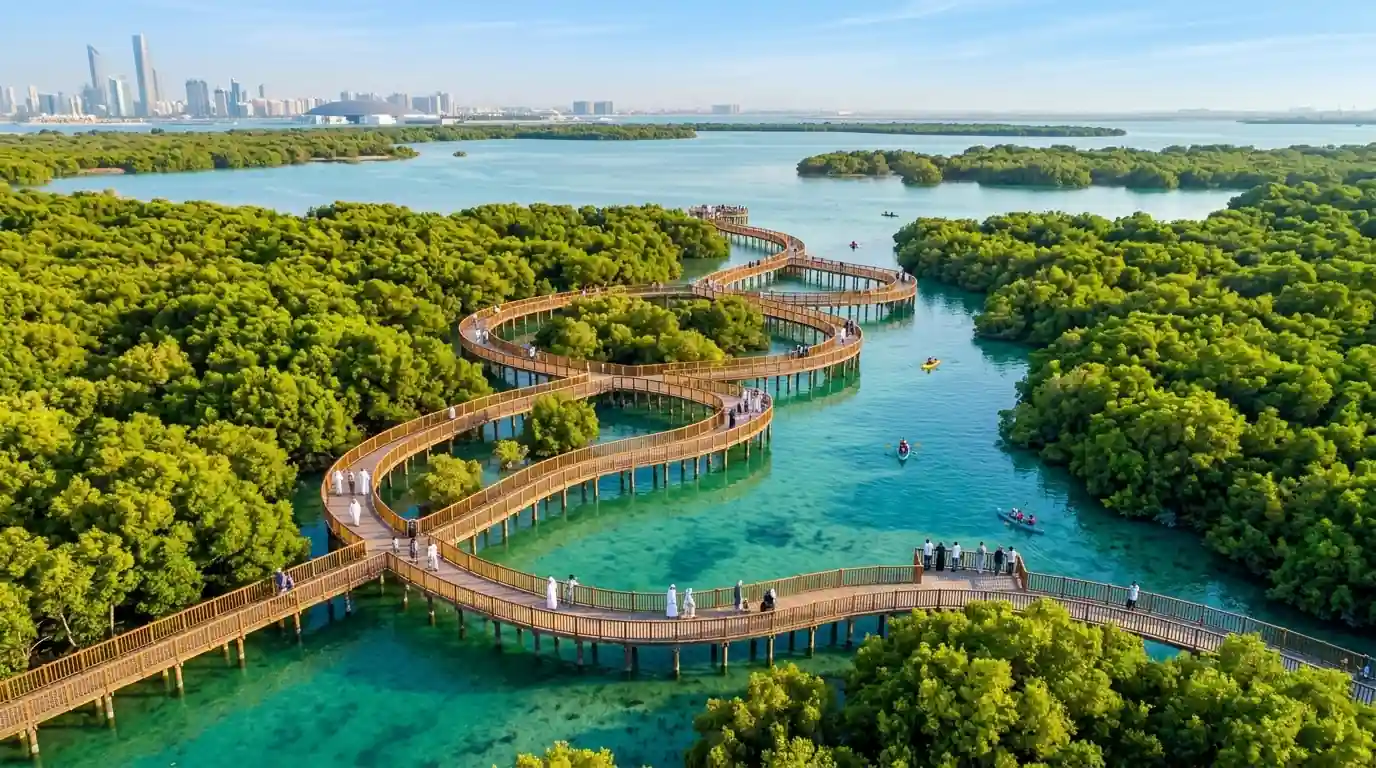
The park has over 2.5 kilometers of elevated wooden boardwalks threading through the mangroves. Three trail options are available, ranging from 1 km to 2 km, all accessible and suitable for families with strollers and visitors with wheelchairs. The boardwalks float just above the water’s surface, giving you an eye-level view of the mangrove root systems and the small creatures living among them. Informative signboards along the trails explain the ecological function of each element you pass.
Kayaking and Paddleboarding
Kayaking is what most people come for, and it lives up to the reputation. Paddling through the narrow mangrove channels at high tide, with the tree canopy closing around you and the water turning glassy and still, is genuinely memorable. Both solo and tandem kayaks are available. Paddleboarding is also offered for those who prefer to stand while exploring. Book your slot in advance as sessions fill up quickly, especially on weekends.
Night Glow Kayak Tour
One of the park’s most unique offerings is the night glow kayak tour, where visitors paddle through the mangroves in the dark using illuminated kayaks. It is a completely different experience from the daytime version and particularly popular with couples and groups. Pre-booking is essential for this activity.
Electric Dragon Boat
The electric dragon boat experience is suited for larger groups and families. It offers a quieter, more relaxed way to see the mangroves from the water without physical exertion. Fares start at AED 100.
Birdwatching and Photography
Observation towers within the park offer elevated views over the mangrove canopy and surrounding water. These spots are ideal for photography during the golden hour, the hour after sunrise and before sunset, when light quality is at its best and wildlife activity peaks.
Educational Programs and Field Trips
The park hosts structured educational programs for school groups, families, and eco-tourism visitors. Ranger-led tours are part of this offering, combining a walk through the boardwalk with detailed explanations of mangrove ecology, conservation efforts, and local wildlife. If you are visiting with children, these guided sessions turn a pleasant walk into an actual learning experience.
Facilities at the Park
The Jubail Mangrove Park visitor center provides useful background on the park’s history and conservation mission through interactive exhibits. Basic facilities including restrooms, a small café, and picnic areas are available on-site. The park is wheelchair accessible and stroller-friendly throughout the boardwalk network.
There was previously a glamping site called Pura Eco Retreat adjacent to the park on Jubail Island, but it appears to have closed as of late 2023 without a new operator taking over. Visitors looking for overnight accommodation should plan to stay in Abu Dhabi or on Yas Island.
Why Jubail Mangrove Park Matters
Beyond recreation, Jubail Mangrove Park represents a meaningful conservation commitment by Abu Dhabi. Mangrove forests absorb carbon dioxide and lock it into their waterlogged soils for long periods, making them one of the most efficient natural carbon sinks on Earth. They also protect coastlines from erosion and storm surges, and they support biodiversity by providing shelter and breeding grounds for hundreds of marine and bird species.
Abu Dhabi has invested heavily in expanding and restoring its mangrove coverage over recent decades. The park is part of that effort, combining active restoration with public education to build long-term appreciation for these ecosystems. Visiting the park, in a very direct way, contributes to the sustainability of this project.
For more on Abu Dhabi’s natural and urban attractions, explore the Abu Dhabi section on Gulf Emirates for guides to neighborhoods, landmarks, and lifestyle destinations across the emirate.
Practical Tips Before You Visit
- Book kayaking and night tours in advance through the official website, especially on weekends and public holidays.
- Visit between 1:00 PM and 3:00 PM for high tide kayaking, or early morning for birdwatching.
- Wear light, breathable clothing and apply sunscreen even in cooler months.
- Bring a reusable water bottle as the UAE heat can dehydrate quickly, even on mild days.
- Comfortable walking shoes or sandals with grip are recommended for the boardwalk.
- Insect repellent is useful during warmer months when humidity rises near the water.
- Photography is encouraged throughout the park.
If you are exploring other industrial zones, residential developments, or lifestyle destinations in Abu Dhabi, the Mafraq Industrial Area guide on Gulf Emirates is a useful read for understanding how the emirate balances development and nature.
For authoritative official information on ticket booking and updated pricing, visit the Visit Abu Dhabi official page for Jubail Mangrove Park directly.
You can also find updated crowd-sourced trip advice and recent visitor reviews on Thrillophilia’s Jubail Mangrove Park guide for real visitor perspectives.
Frequently Asked Questions
Where is Jubail Mangrove Park located?
It is on Jubail Island in Abu Dhabi, positioned between Yas Island and Saadiyat Island along the E12 highway.
What is the Jubail Mangrove Park ticket price in 2026?
General boardwalk admission starts at AED 15 for adults and AED 10 for children. Ranger-guided tours start at AED 40, and kayaking starts from AED 100.
Which bus goes to Jubail Mangrove Park?
Bus numbers 32, 101, 104, 110, 111, 400, and 401 serve the Jubail Island area. A private car or taxi remains the most convenient option.
What are the park’s opening hours?
The park is open daily from 7:00 AM to 9:00 PM.
When is the best time to visit Jubail Mangrove Park?
For kayaking, visit between 1:00 PM and 3:00 PM during high tide. For birdwatching, early morning is best. October through April is the most comfortable season overall.
Is kayaking available at the park?
Yes. Kayaking is the park’s most popular activity. Both daytime and night glow kayak tours are available and must be booked in advance.
Is the park family-friendly?
Yes. The boardwalks are stroller and wheelchair accessible. Educational programs and guided tours are also designed for families and school groups.