


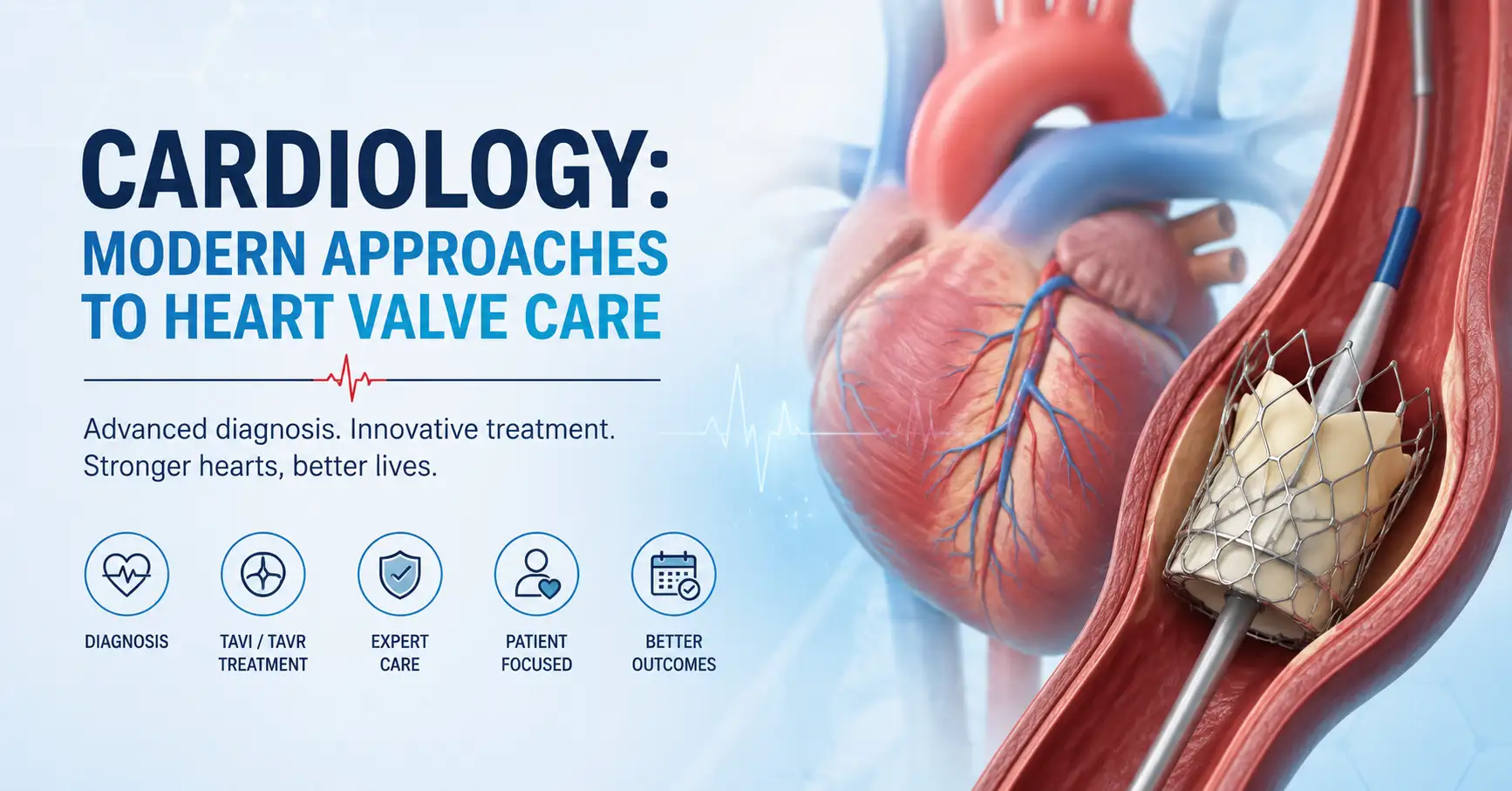
Cardiology: Modern Approaches to Heart Valve Care
Heart valve disease can gradually interfere with the way blood moves through the heart. A narrowed valve may restrict blood flow, while a valve that does not close properly can allow blood to flow backwards. As the condition progresses, patients may develop breathlessness, tiredness, chest discomfort, dizziness or reduced ability to exercise.
Advances in cardiology have introduced less invasive options for selected patients with significant valve disease. One such procedure is transcatheter aortic valve replacement, which allows a replacement valve to be delivered through a catheter rather than through conventional open-heart surgery.
Understanding Aortic Valve Disease
The aortic valve sits between the left ventricle and the aorta. It opens to allow blood to leave the heart and closes to prevent blood from flowing backwards.
Aortic stenosis occurs when the valve becomes narrowed and does not open fully. The heart then has to work harder to push blood through the restricted opening.
The condition may progress gradually. Some people remain without symptoms for a period, while others develop noticeable limitations as the narrowing becomes more severe.
Common symptoms include:
- Breathlessness during physical activity
- Chest pain or pressure
- Dizziness or fainting
- Reduced stamina
- Fatigue
- Swelling in the legs in more advanced cases
A cardiology assessment is important when these symptoms occur, particularly in people who already have known valve disease.
How Is Aortic Valve Disease Diagnosed?
Diagnosis involves understanding the patient’s symptoms and examining how the valve is functioning. Echocardiography is one of the main investigations used to assess aortic stenosis.
An echocardiogram can show the structure of the valve, how well it opens and the effect of the narrowing on the heart. Other investigations may be recommended when further information is needed.
These can include:
- Electrocardiography
- CT cardiac imaging
- Chest imaging
- Blood tests
- Cardiac catheterisation
- Exercise assessment in selected patients
The results help the cardiac team determine the severity of the valve problem and whether intervention should be considered.
What Is TAVI or TAVR?
TAVI, also called TAVR, is a catheter-based procedure used to replace a diseased aortic valve. The replacement valve is compressed onto a delivery system and guided to the heart through a blood vessel.
Once positioned inside the existing valve, the replacement valve is expanded. It takes over the function of the damaged valve, allowing blood to flow more freely from the heart into the aorta.
Unlike traditional surgical valve replacement, TAVI does not usually require opening the chest. However, it is still a specialised cardiac procedure and requires careful patient selection.
Who May Be Considered for TAVI?
TAVI may be suitable for selected patients with severe symptomatic aortic stenosis. Age, general health, valve anatomy, cardiovascular risk and previous medical or surgical history are all considered.
It may be particularly useful for patients for whom conventional open-heart surgery carries increased risk. However, TAVI is not automatically the preferred option for everyone with aortic stenosis.
A multidisciplinary heart team reviews the patient’s clinical findings and imaging before recommending the most appropriate treatment.
What Happens During TAVI?
The procedure is performed in a specialised cardiac intervention setting. A catheter is introduced through an access vessel, commonly in the groin, although another access route may sometimes be required.
The replacement valve is carefully advanced towards the heart under imaging guidance. Once it reaches the aortic valve, the new valve is positioned and expanded.
The damaged native valve is not usually removed. Instead, the replacement valve is placed within it and begins functioning as part of the heart’s outflow pathway.
TAVI TAVR Treatment in Dubai
Patients considering TAVI TAVR treatment in Dubai require a detailed evaluation before the procedure is planned. Echocardiography and cardiac CT may be used to assess the valve and determine whether the patient’s anatomy is suitable for a transcatheter approach.
The cardiac team also considers kidney function, blood vessel anatomy, existing heart conditions and other medical factors. This information helps determine the safest access route and appropriate valve size.
The decision between TAVI and surgical valve replacement should be made after discussing the available options with the treating cardiac team.
Recovery After TAVI
Recovery following TAVI varies according to the patient’s age, health and response to treatment. Patients are monitored after the procedure to check heart rhythm, blood pressure, valve function and the catheter access site.
The medical team may also assess for potential complications before discharge. Follow-up appointments are important for monitoring the replacement valve and overall cardiac health.
Patients may receive instructions regarding medication, physical activity and wound or access-site care during the early recovery period.
Why Regular Follow-Up Matters
Replacing the aortic valve addresses the mechanical problem caused by severe stenosis, but continued cardiac care remains important.
Follow-up may include clinical examinations, echocardiograms and medication reviews. Patients should also report new symptoms such as increasing breathlessness, chest discomfort, dizziness, palpitations or swelling.
Regular monitoring allows the cardiology team to assess the performance of the replacement valve and identify other cardiovascular concerns.
Choosing a Cardiologist for Valve Treatment
Valve procedures require careful assessment before, during and after treatment. Patients should consider specialist experience, access to advanced cardiac imaging and the availability of a multidisciplinary team when selecting their healthcare provider.
Patients looking for the best cardiologist in Dubai should focus on the specialist’s experience with the specific heart condition, diagnostic approach and ability to provide appropriate treatment options based on individual clinical findings.
At Aster Hospitals, cardiology care includes assessment of heart valve disorders, diagnostic testing and specialist management. Treatment recommendations are based on the patient’s condition, test results and overall health.
Life After Valve Replacement
A successful valve procedure is followed by continued attention to cardiovascular health. Patients should take prescribed medicines as directed and attend follow-up appointments recommended by their cardiologist.
Maintaining healthy blood pressure, controlling cholesterol and diabetes, avoiding tobacco and following appropriate physical activity recommendations can support overall heart health.
The patient’s cardiology team can also advise on when normal activities, exercise and travel can be resumed following the procedure.
Frequently Asked Questions
Is TAVI the same as TAVR?
Yes. TAVI stands for transcatheter aortic valve implantation, while TAVR means transcatheter aortic valve replacement. Both terms describe the same general type of catheter-based aortic valve replacement.
Is TAVI suitable for everyone with aortic stenosis?
No. Suitability depends on the severity of valve disease, symptoms, valve anatomy, age, general health and surgical risk. A specialist heart team determines whether TAVI is appropriate.
Does TAVI require open-heart surgery?
TAVI is performed using a catheter-based technique and does not usually require opening the chest. The specific approach depends on the patient’s anatomy and clinical circumstances.
How long does recovery after TAVI take?
Recovery varies between patients. The hospital stay and return to normal activities depend on overall health, the procedure and whether any complications occur. Your cardiology team will provide individual recovery guidance.