


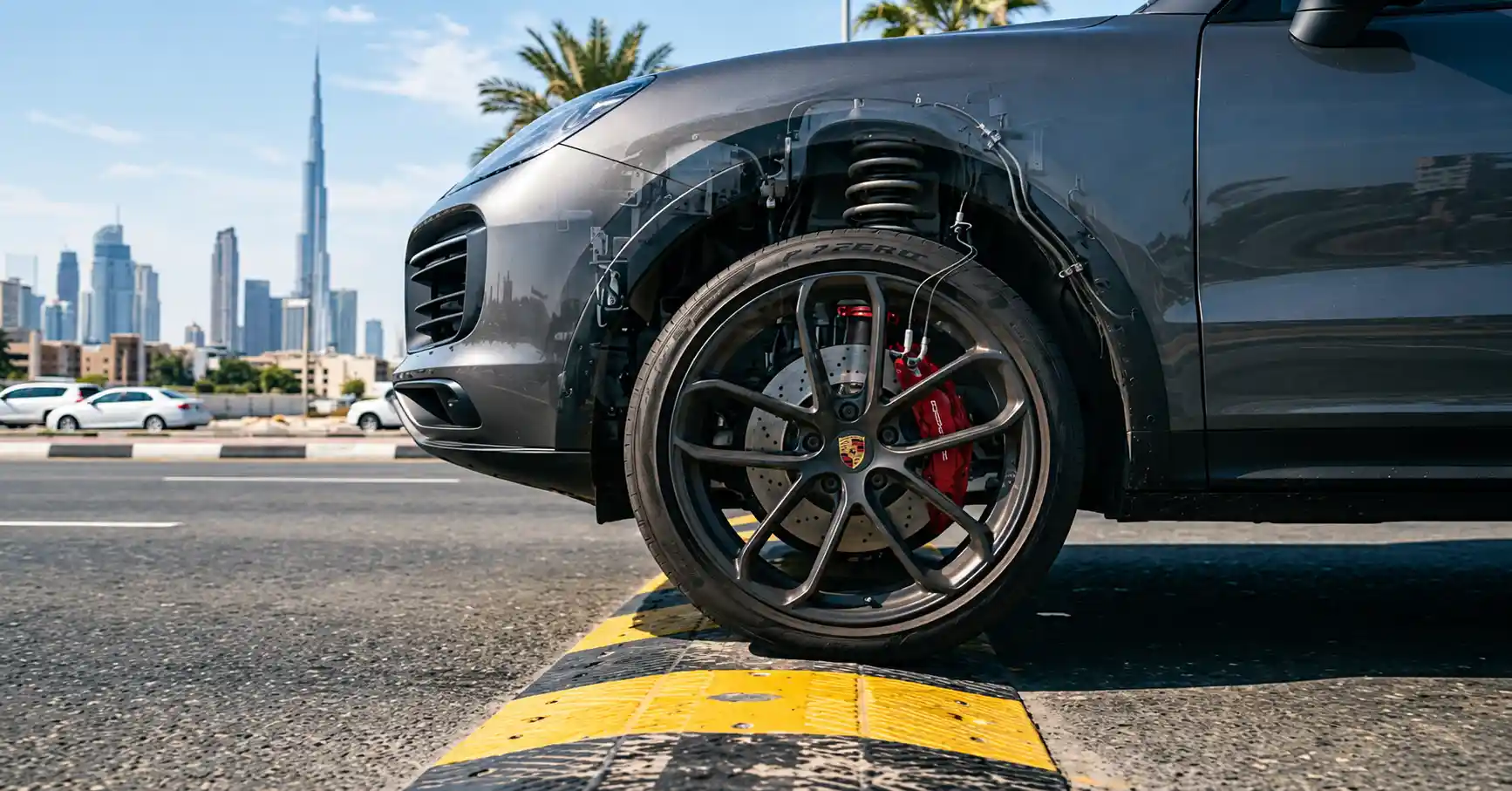
What That Clunking Noise Over Dubai Speed Bumps Could Mean
A sudden clunk over a speed bump can be more than an annoying sound. It may be your car warning you that something underneath is becoming loose, worn, or damaged.
In Dubai, this noise often comes from suspension parts that have been weakened by heat, repeated bumps, dust, and daily driving.
Worn bushings, sway bar links, ball joints, shocks, struts, or springs can knock when the suspension moves up and down. Finding the cause early can help prevent the problem from affecting steering, tires, and overall road control.
Common Causes of Clunking Noises Over Dubai Speed Bumps
1. Worn Control Arm Bushings Can Cause a Heavy Clunk
Control arm bushings are rubber parts that help connect the control arm to the vehicle while allowing controlled movement. They also reduce vibration between metal components. Dubai’s high temperatures can make these rubber parts dry, hard, and cracked over time.
When the rubber loses its ability to cushion movement, the control arm can move too much. A heavy clunk may then occur when the wheel goes over a speed bump.
The sound can become louder when the vehicle carries extra weight or crosses a bump at an angle.
2. Damaged Sway Bar Links May Make a Light Knock
Sway bar links connect the anti-roll bar to the suspension and help reduce body movement when the car turns. These small parts work every time the vehicle travels over an uneven surface.
When their joints become loose or worn, they may create a quick metallic clunk over speed bumps. The noise is often easier to hear at low speeds because the suspension moves sharply over the bump.
If the clunking sound keeps returning, it is better to have the suspension checked before the problem gets worse. A professional car suspension repair can inspect the undercarriage, test the joints, and identify the worn part causing the noise. Early repairs can also help prevent damage to tires and other suspension components.
3. Loose Ball Joints Can Produce a Sharp Knock
Ball joints allow the suspension and steering system to move together while keeping the wheel connected to the vehicle. They need proper lubrication and a good protective boot to work correctly.
If the boot cracks or tears, dust and sand can enter while grease escapes. This can increase wear inside the joint. A loose ball joint may create a sharp knock when the wheel moves over a speed bump.
Drivers may also feel looseness in the steering. Because ball joints are important for wheel control, unusual noise from this area should not be ignored.
4. Worn Shocks or Struts May Be Losing Their Control
Shocks and struts control how quickly the suspension moves after the car hits a bump. When they become worn, the vehicle may bounce more than normal instead of settling quickly.
A clunk can appear when the suspension reaches the end of its movement or when a worn mount allows extra movement. Drivers may notice that the car feels soft, unstable, or difficult to control after crossing a speed bump.
Oil leaking from a shock is another warning sign. Repeated bouncing can also make the tires work harder to stay in contact with the road.
5. Broken or Weak Coil Springs Can Shift Under Load
Coil springs support much of the vehicle’s weight and help maintain the correct ride height. A spring can weaken, crack, or break after years of use or repeated hard impacts. When this happens, part of the spring may move out of its normal position and hit another component.
This can create a noticeable clunk when the suspension compresses over a speed bump. A broken spring may also make one corner of the car sit lower than the others. Uneven ride height is a clear reason to have the suspension checked without delay.
6. Strut Mounts Can Create Noise From Above the Wheel
The upper strut mount connects the strut assembly to the vehicle body. It also helps absorb movement and, on some vehicles, allows the strut to turn with the steering. When the mount becomes worn, the strut may move more than it should.
This extra movement can produce a clunk when the car passes over a bump. Drivers may also notice a knocking sound while turning the steering wheel. A damaged mount can affect both comfort and steering feel, so it should be inspected if the noise keeps returning.
7. Air Suspension Problems Can Cause a Heavy Thud
Luxury vehicles with air suspension have additional parts that can develop faults. Air bags, valves, compressors, height sensors, and electronic controls all work together to maintain the correct ride height.
A fault in one of these parts can change how the vehicle reacts to a speed bump. A heavy thud, uneven ride height, or slow return to normal height may point to an air suspension issue.
If one side of the vehicle sits lower after parking, the system should be checked before continued driving creates more stress on other suspension components.
8. Heat and Dust Can Speed Up Suspension Wear
Dubai’s weather creates a tough environment for rubber and moving parts. Very high temperatures can speed up the aging process of bushings, seals, and protective boots. Fine sand and dust can also enter damaged boots and mix with grease inside joints.
Once protection is lost, wear can happen faster. This is one reason a suspension part may seem fine for years and then begin making noise more often. Regular checks can find cracked rubber, leaking parts, or loose joints before the problem becomes more serious.
Warning Signs You Should Not Ignore
A clunking sound becomes more concerning when it appears with other changes in how the car drives. These signs can indicate that a worn part is affecting more than comfort.
- Loose steering: The vehicle may feel less direct or wander on the road.
- Excessive bouncing: The car may continue moving after crossing a speed bump.
- Uneven tire wear: One side or edge of a tire may wear faster than normal.
- Steering vibration: A worn component may send movement through the steering wheel.
- Uneven ride height: One corner may sit lower than the others.
- Pulling to one side: The vehicle may not track straight.
- New tire noise: Suspension or alignment problems can change how tires contact the road.
- More body movement: The car may lean more during turns or braking.
These signs should not be treated as normal wear, especially when they appear together.
Conclusion
A clunking noise over Dubai speed bumps usually means that one or more suspension parts need attention. Worn bushings, sway bar links, ball joints, shocks, strut mounts, coil springs, and air suspension parts can all create unusual sounds when the vehicle moves over bumps.
Dubai’s heat, dust, and repeated road impacts can speed up this wear. If the noise is joined by loose steering, bouncing, vibration, or uneven tire wear, do not wait for the problem to become worse.
A proper inspection can find the damaged part and help keep your vehicle stable and safe on Dubai roads.