


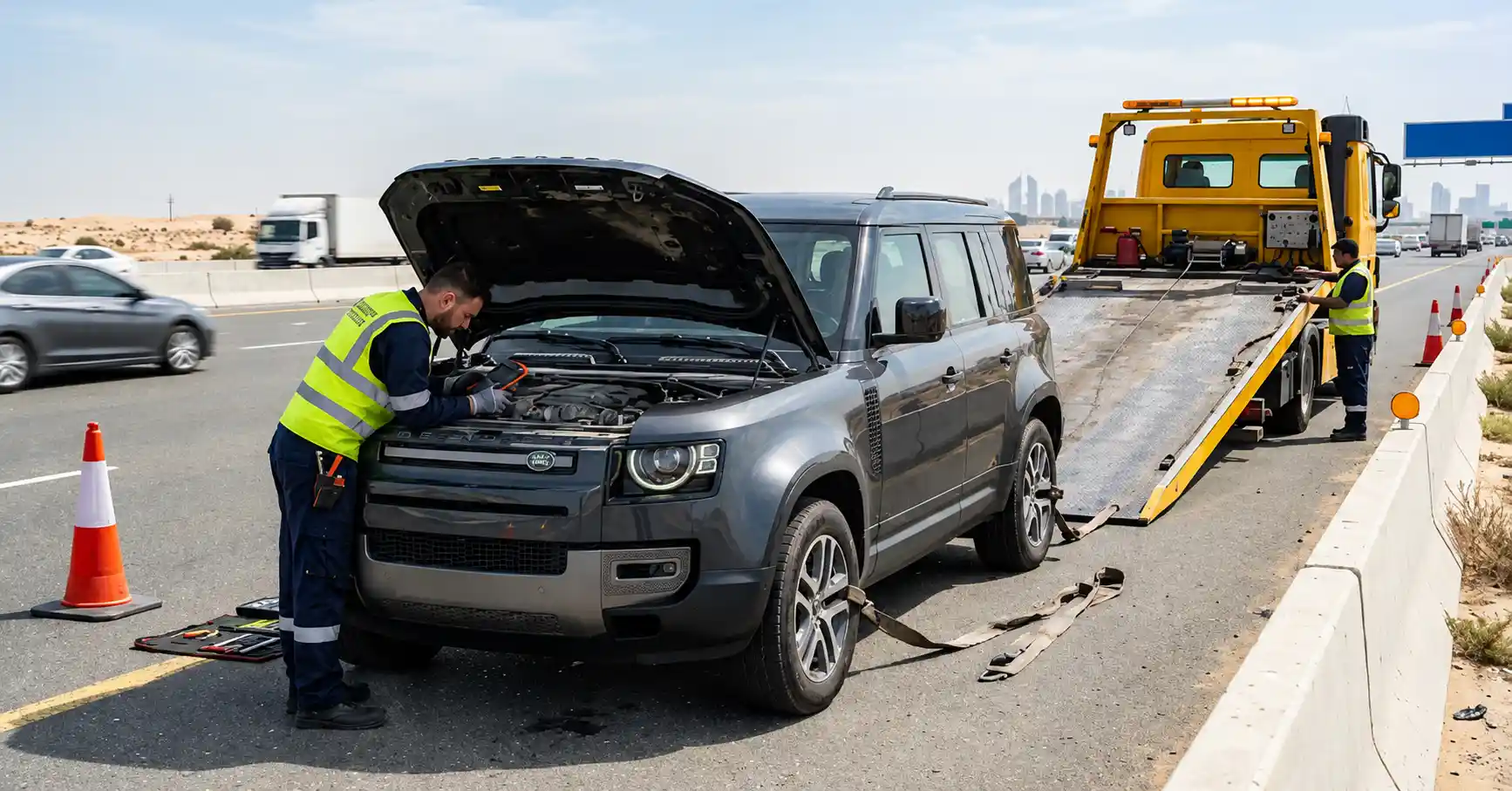
When Does a Broken-Down Car Need Towing Instead of a Jump-Start?
A dead car battery does not always mean you need a tow truck. In some cases, a jump-start can get the engine running again, but other problems may make driving the vehicle unsafe or cause more damage.
You should consider towing when the car still will not start after a proper jump-start, has another serious fault, or cannot be driven safely. If you need a car towing service in Sharjah, you can contact a trusted provider such as Sayara Battery for professional roadside assistance and vehicle transport.
Having the car moved to a suitable workshop allows technicians to identify the actual cause of the problem and carry out the necessary repairs safely.
What Is the Difference Between a Jump-Start and Towing?
A jump-start is mainly used when a vehicle has a weak or discharged battery, but the rest of the starting system is working properly. It uses another battery or a suitable booster to provide enough power for the engine to start.
Towing is different because it moves the entire vehicle to another location. Towing may be needed when the battery is not the only problem or when the vehicle cannot be driven safely. Knowing the difference can help you avoid driving a car that has a more serious fault.
When Should You Choose Towing Over a Jump-Start?
1. The Car Starts Normally After a Jump-Start
If your car starts quickly after a proper jump-start and there are no warning signs, you may not need towing immediately. A weak battery can happen if the lights were left on, the car has not been driven for a long time, or the battery is reaching the end of its useful life.
However, a jump-start only gets the engine running. It does not repair the battery. If the battery is old or keeps losing charge, have it tested as soon as possible instead of assuming the problem is solved.
2. The Engine Still Will Not Start After a Jump
If the vehicle does not start after a correct jump-start, the battery may not be the main problem. The vehicle could have a faulty starter motor, alternator, fuel system, ignition component, or electrical fault.
Repeatedly trying to start the engine may also place extra strain on the battery and starter. At this point, it is better to stop guessing and arrange professional assistance.
If the car cannot be driven, towing it to a workshop allows a technician to test the starting and charging systems properly.
3. The Battery Is Completely Damaged
Sometimes a battery is too damaged or worn out for a jump-start to provide a lasting solution. An old battery may have internal damage, a failed cell, or severe loss of capacity. In such cases, the engine may start briefly but fail again soon after.
If the battery case is cracked, swollen, leaking, or otherwise damaged, do not attempt to jump-start it. Professional help is a safer option.
Depending on the location and service available, the technician may replace the battery where the car stopped or arrange towing if further checks are needed.
4. The Alternator Is Not Charging the Battery
The alternator keeps the battery charged while the engine is running and supplies power to many electrical systems. If it fails, a jump-start may get the engine running, but the battery can quickly lose power again.
You may notice dim lights, battery warning lights, electrical problems, or repeated starting trouble. Driving for a long distance with a failed charging system can leave the vehicle without enough power to keep running.
If an alternator fault is suspected, towing the vehicle to a workshop is often a better choice than continuing to drive.
5. The Car Has an Engine or Mechanical Problem
Not every no-start problem comes from the battery. A vehicle may fail to start because of an engine fault, fuel problem, damaged timing component, or another mechanical issue. You may also hear unusual sounds when turning the key or pressing the start button.
If there is smoke, a strong burning smell, fluid leaking under the vehicle, or a serious warning message, do not keep trying to start it. A tow truck can take the vehicle to a workshop where the engine and related systems can be inspected without putting further strain on damaged parts.
6. The Car Starts but Cannot Be Driven Safely
Sometimes the engine starts after a jump, but that does not mean the vehicle is ready to drive. Problems with the brakes, steering, tyres, transmission, suspension, or cooling system can make driving unsafe.
For example, if the temperature rises quickly after starting the engine, continuing to drive could cause serious engine damage. The same applies if the brakes feel weak or the steering does not respond normally.
In these situations, towing is a better option because the vehicle can be transported without relying on the damaged system.
7. You Are Stranded in a Difficult Location
The location of the breakdown can also affect the decision between a jump-start and towing. If the vehicle stops on a busy highway, in an unsafe roadside area, or far from a suitable workshop, getting professional recovery may be the better choice.
A roadside technician can first check whether a jump-start or battery replacement is possible. If the problem cannot be fixed there, the vehicle can then be towed.
This approach saves time and avoids repeated attempts to drive a vehicle that may not be ready for the road.
8. Warning Signs Mean You Should Stop Driving
Certain warning signs should not be ignored after a jump-start. A battery warning light, high engine temperature, loss of power, unusual engine noise, burning smell, smoke, or repeated stalling can point to a larger problem.
Continuing to drive when these signs appear may turn a small repair into a much more expensive one. If the car starts but quickly shows signs of a serious fault, switch it off and arrange professional help.
A proper inspection can determine whether the issue is the battery, charging system, engine, or another vehicle component.
Can a Jump-Start Damage Your Car?
A jump-start is generally safe when the correct procedure and suitable equipment are used. However, connecting the cables incorrectly or using unsuitable equipment can damage electrical components.
Modern vehicles can have sensitive electronic systems, so it is important to follow the vehicle manufacturer’s instructions. Do not attempt a jump-start if the battery is visibly cracked, swollen, leaking, or badly damaged.
If you are unsure about the correct connection points, ask a professional for help. It is better to spend a little more time getting proper assistance than risk an electrical repair.
What Should You Check After a Successful Jump-Start?
If your vehicle starts after a jump, do not assume the problem is completely fixed. The battery and charging system should be checked, especially if the battery was already showing signs of weakness.
A technician can test the battery’s condition and check whether the alternator is producing the correct charging output. You should also pay attention to warning lights, slow starting, dim headlights, or electrical problems.
If the battery repeatedly goes flat, there is likely an underlying issue that needs attention. Finding that cause can prevent another breakdown.
Final Thoughts
A jump-start can be useful when a healthy vehicle has a temporarily discharged battery, but it is not a solution for every breakdown. If the engine still will not start, the battery is damaged, the alternator is not charging, or the car has a serious mechanical fault, towing may be the better choice.
The same applies when the vehicle starts but cannot be driven safely. Car towing can transport the vehicle to a suitable workshop for proper diagnosis. Avoid repeated starting attempts and do not drive if the car shows signs of a serious fault.