


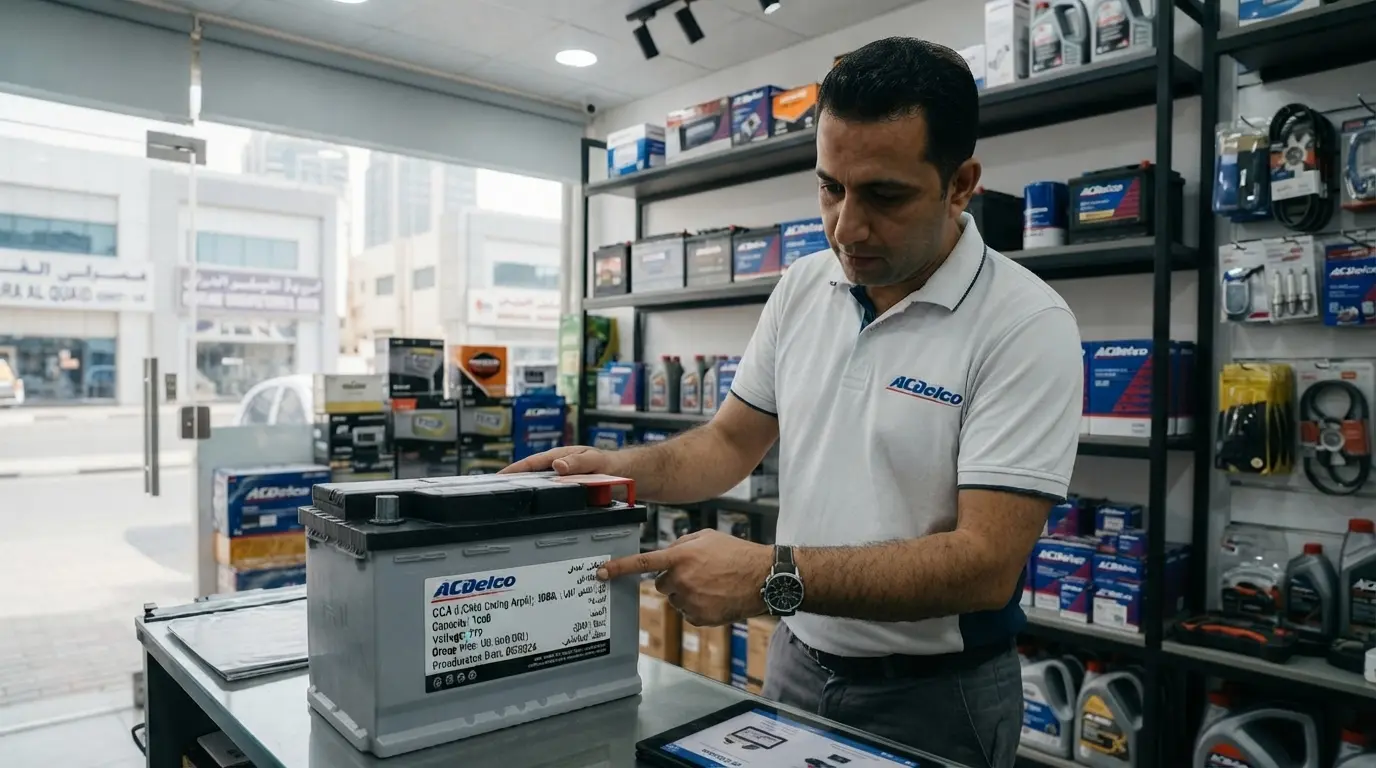
How to Read a Car Battery Label Before Buying in Dubai?
Buying a car battery in Dubai can feel confusing if you don’t know what the numbers and letters on the label mean. The good news is that once you understand the basics, you can pick the right battery without any guesswork.
To read a battery label correctly, you need to check three main things: the battery’s size and group number, its power ratings (CCA and Ah), and its date of manufacture. After that, look at the reserve capacity and any warranty details printed on the label.
These simple steps will save you money and help you avoid buying the wrong battery for your car.
What Is a Car Battery Label and Why Does It Matter?
A car battery label is the sticker or printed panel on the side of the battery. It holds all the key details about how the battery performs and whether it fits your car. Many people skip reading it and just buy the cheapest option available.
But in Dubai’s extreme heat, choosing the wrong battery can leave you stranded on the road within months. The label tells you everything you need to know before spending your money, so it is worth spending a few minutes to understand it.
Steps To Read a Car Battery Label Before Buying
Here are the easy steps to read and understand the car battery label:
Step 1: Understanding the Battery Group Size
Group size is one of the first things you should look at on any battery label. It tells you whether the battery will physically fit inside your car and whether the terminals line up correctly with your cables. Getting this wrong means the battery will either not fit or cause connection problems.
What Is a Group Size?
The group size is a code that tells you the physical dimensions of the battery; its length, width, and height, along with where the positive and negative terminals are placed. For example, you might see codes like 55D23L or 65 on the label. These codes follow standards set by battery organizations so that every brand uses the same sizing system.
Why Group Size Matters in Dubai?
If the group size does not match your car’s battery tray, the battery will either not fit at all or will move around while you drive. This can damage the battery terminals and even cause a short circuit.
Always cross-check the group size on the label with the one listed in your car’s owner’s manual before buying. Trusted brands like Varta Car Battery in Dubai clearly print the group size on their labels, making it easy to compare.
Step 2: Reading the Cold Cranking Amps (CCA) Rating
After checking the group size, the next number to find on the label is the CCA rating. This indicates how powerful the battery is at starting your car. Both the definition and its relevance to Dubai’s climate are explained below.
What Does CCA Mean?
CCA stands for Cold Cranking Amps. It measures how much power the battery can deliver at low temperatures to start your engine. A higher CCA number means the battery can push more power to the starter motor in cold conditions. Most labels will show this as CCA: 600A or something similar.
Does CCA Matter in a Hot Place Like Dubai?
You might wonder why cold-weather ratings matter in a city known for heat. The answer is that CCA is still used as a general performance standard worldwide, even in warm climates.
A battery with a higher CCA rating in Dubai will often handle the extra load placed on it by the air conditioning system and other electronics better than one with a lower rating. Aim for a battery that meets or exceeds the CCA recommended in your car manual.
Step 3: Checking the Ampere-Hour (Ah) Capacity
The Ampere-Hour rating, shown as Ah on the label, tells you how much energy the battery can store and release over time. Think of it like the fuel tank of the battery. A 60Ah battery can deliver 60 amps of power for one hour before it needs to be recharged.
In Dubai, where cars often sit in extreme heat, and the electrical system works harder to run air conditioning, a higher Ah battery gives you more reliability and a longer backup time.
Step 4: The Reserve Capacity (RC) Rating
Reserve Capacity is another number on the label that many buyers ignore. It tells you how many minutes a fully charged battery can run your car’s basic systems, like lights and the engine, if the alternator stops working.
The label might show it as RC: 90 min. A higher reserve capacity is useful in Dubai traffic jams, where the engine and cooling systems run constantly. Look for a battery with an RC of at least 80 to 90 minutes for everyday city driving.
Car Battery Label – Quick Reference Table
Before moving on to the date and warranty details, here is a simple table that puts all the key label markings in one place. Use this as a quick checklist the next time you are standing in a battery shop.
| Label Marking | What It Means | Ideal Value (Dubai) |
| Group Size (e.g., 55D23L) | Physical size and terminal position | Must match the car manual |
| CCA (Cold Cranking Amps) | Starting power in cold conditions | Meet or exceed the car spec |
| Ah (Ampere-Hour) | Total stored energy capacity | 60Ah or higher |
| RC (Reserve Capacity) | Backup runtime without an alternator | 80–100+ minutes |
| MCA (Marine Cranking Amps) | Starting power at 0°C | Optional reference |
| Date Code | Manufacturing date | Less than 6 months old |
How to Read the Manufacturing Date on the Label?
The date printed on a battery label is just as important as the power ratings. A battery that has been sitting in a warehouse for too long will already be weaker before you even install it. The two sections below explain why the date matters and how to find it on different brands.
Why the Date Matters?
A car battery starts losing its charge slowly from the day it is made, even when sitting on a shelf. If you buy a battery that has been stored for more than 6 months, it may already be weaker than a fresh one. Always check the date code on the label before buying.
How Date Codes Are Written?
Date codes vary by brand, but most follow one of two formats:
- Letter + Number format: The letter stands for the month (A = January, B = February, and so on) and the number stands for the year. So C6 means March 2026.
- Numeric format: Some labels use a simple printed date like 03/2026, which means March 2026.
If the label has no clear date or the date is hard to find, ask the seller to confirm it. A good retailer will always be transparent about battery age.
Warranty Information on the Battery Label
Most battery labels include a warranty period printed directly on them, such as 2 Years Free Replacement or 18 Months Warranty. In Dubai, where heat wears down batteries faster than in cooler climates, a longer warranty is a sign of confidence from the manufacturer.
Read the warranty terms carefully. Some warranties only cover manufacturing defects, while others cover general failure. Look for a battery with at least 12 to 24 months of warranty coverage for peace of mind.
Tips for Buying a Car Battery in Dubai
Before you go to the shop, keep these points in mind:
- Bring your car manual or note down the battery specs currently in your car.
- Check the date code and avoid batteries older than 6 months.
- Compare the group size on the label with what your car needs.
- Do not only focus on price; a cheap battery with a low Ah or CCA rating will cost you more in the long run.
- Ask about installation; many battery shops in Dubai offer free fitting when you buy from them.
- Buy from a trusted brand; established brands print clear, accurate information on their labels and stand behind their warranty claims.
Conclusion
Reading a car battery label is not complicated once you know what each marking means. Start with the group size to make sure the battery fits your car. Then check the CCA and Ah ratings to confirm the battery has enough power and storage for Dubai’s demanding conditions.
Look at the reserve capacity for backup reliability, and always check the manufacturing date to ensure you are getting a fresh unit.
Finally, read the warranty terms so you know you are covered if something goes wrong. Whether you are shopping at a local auto store or an authorized dealer for a Varta car battery in Dubai, understanding the label gives you the confidence to make the right choice every time.