


Skycourt Towers Dubai: Complete 2026 Guide to Living and Investing
Skycourt Towers, also written as Skycourts Towers, is a six-tower residential community in Dubailand that pairs affordable apartments with solid shared amenities and quick highway access to Dubai’s main business districts. Mid-market communities like this one continue to draw working professionals, students, and families who want value without giving up community facilities. This guide walks through what you really need to know before you rent, buy, or invest: the location, the towers, apartment types, honest pricing, rental yields, and the everyday trade-offs of living there.
What Are Skycourt Towers and Where Are They Located?
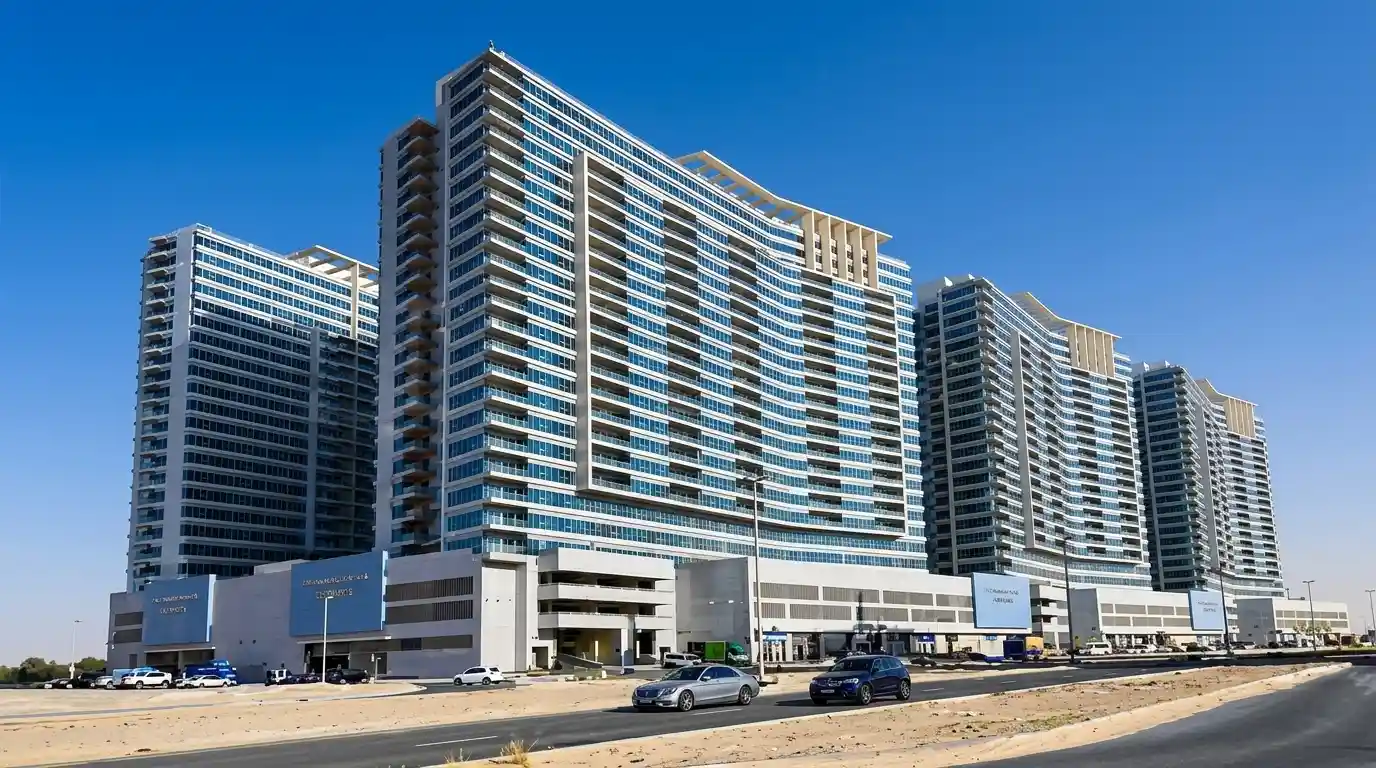
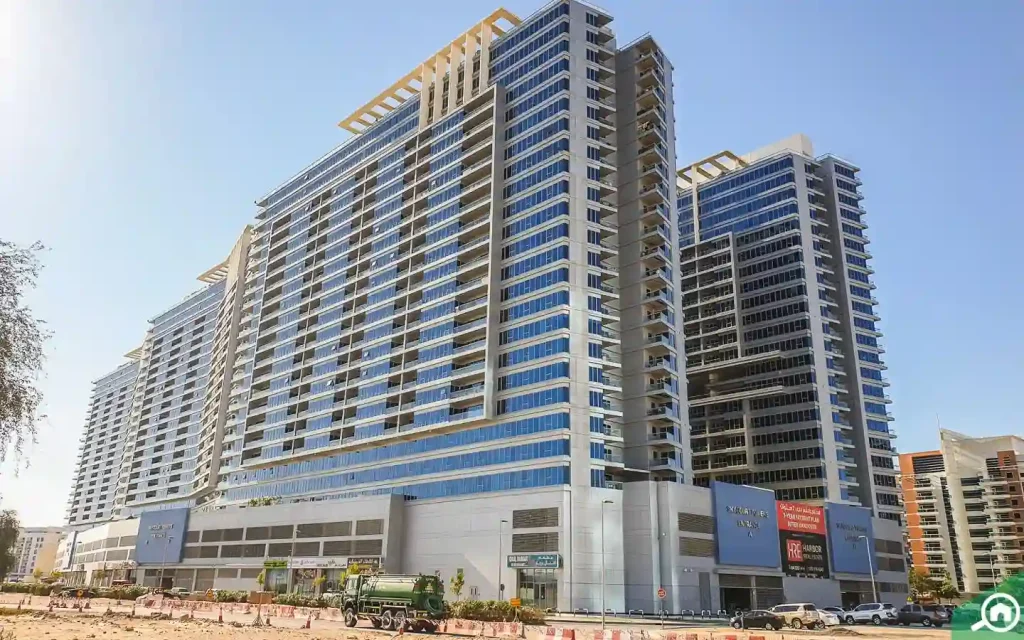
Skycourt Towers are six residential high-rises, Tower A through Tower F, set within the Dubailand Residence Complex in the Wadi Al Safa 5 area, just off Al Ain Road (E66) with Emirates Road (E611) close by. The development was built by National Bonds Corporation PJSC, with construction starting in 2007 and completion in 2011. The roughly AED 1.6 billion project delivers around 2,832 apartments across the six 21-storey towers, which share a podium with parking, retail outlets, and landscaped courtyards. Each building runs independently, but residents move freely across the shared facilities.
The address puts you about 20 minutes from Downtown Dubai and roughly 15 minutes from Dubai Silicon Oasis. Dubai International Academic City sits about 10 minutes away, which makes the towers a practical base for university staff and students. The E66 highway gives direct access to Business Bay, DIFC, and Dubai International Airport within 25 to 30 minutes during off-peak hours.
For public transport, you are looking at RTA buses along Al Ain Road. The nearest metro station needs a taxi or car to reach. That is the honest trade-off for lower rent: a vehicle or a ride-sharing budget makes daily life far smoother.
Which Towers Make Up the Skycourt Complex?
The complex includes all six towers: Skycourts Tower A, Tower B, Tower C, Tower D, Tower E, and Tower F. Each tower follows the same architectural template, with small differences in unit mix and podium-level retail. You may see some listings group the towers differently, but the development was always planned and delivered as a full A to F set.
Tower C tends to attract the most search interest thanks to competitive pricing and availability. Tower A sits closest to the main entrance gate. Towers E and F occupy the rear section with courtyard-facing views. All towers share the same security setup, on-site management office, and amenity access, so your choice mostly comes down to view, floor, and price rather than facilities.
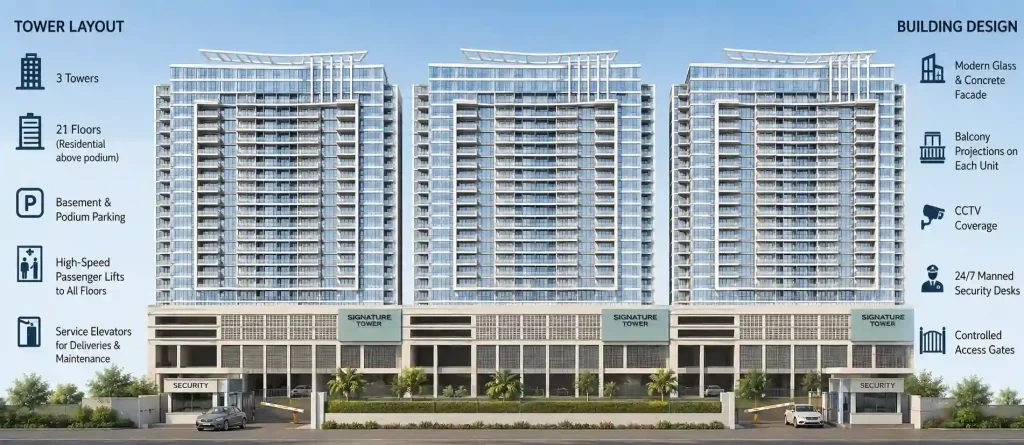
Tower Layout and Building Design
Each tower rises from a ground-plus-podium structure. Parking sits in the basement and lower podium levels, with residential floors starting above the podium. High-speed passenger lifts serve every floor, while service elevators handle deliveries and maintenance. The exterior uses glass and concrete with projecting balconies on most units. Common areas carry CCTV coverage, 24-hour manned security desks, and controlled access gates. The design clearly favours function over architectural showpieces.
What Apartment Types Are Available in Skycourt Towers?
Skycourt Towers offer studio, one-bedroom, and two-bedroom apartments with built-in wardrobes, Skycourt Towers offer studio, one-bedroom, and two-bedroom apartments with built-in wardrobes, modern kitchens, ceramic tile flooring, and balconies in most units. Studio apartments typically range from 430 to 530 square feet. One-bedroom units span 750 to 900 square feet. Two-bedroom apartments measure 1,100 to 1,350 square feet, though a handful of layouts sit slightly above or below those bands.
| Apartment Type | Size Range (sq ft) | Typical Layout | Best For |
| Studio | 430 to 530 | Open plan, kitchenette, bathroom | Single professionals, students |
| 1-Bedroom | 750 to 900 | Bedroom, living area, kitchen, bathroom, balcony | Couples, individual renters |
| 2-Bedroom | 1,100 to 1,350 | Two bedrooms, two bathrooms, living and dining, kitchen, balcony | Small families, sharers |
Units come with built-in kitchen cabinets, thermal-insulated windows, and balconies facing either the internal courtyards or the wider Dubailand skyline. Cooling is supplied through a district cooling system that is billed separately from rent, so it is worth asking for a sample cooling bill before you sign, since these charges can add up in summer. Finishes throughout are standard mid-range quality.
Studio Apartments: Entry-Level Options
Studios suit single professionals or students attending nearby Academic City campuses. The open-plan design combines sleeping and living space. Kitchenettes include a two-burner stove, a small fridge, and limited counter space. Most units have a window, though not every studio includes a balcony.
One-Bedroom Units: The Most Popular Choice
One-bedroom apartments see the highest occupancy and turnover because they balance space, cost, and function. The separate bedroom gives real privacy, the living area fits a small dining setup, and kitchens are either semi-open or closed with full-size appliances. For couples or solo renters who want a proper home rather than a single room, this is the sweet spot.
Two-Bedroom Apartments: Family-Friendly Space
Two-bedroom units work for small families or roommates splitting costs. The master bedroom usually has an en-suite bathroom, while a second bathroom serves the other bedroom and guests. Living areas are large enough for family use, and balconies extend off the living room or master bedroom.
What Facilities and Amenities Do Skycourt Towers Provide?
Residents access swimming pools, a fully equipped gym, children’s play areas, landscaped courtyards, Residents access swimming pools, a fully equipped gym, children’s play areas, landscaped courtyards, jogging tracks, ground-level retail, and 24-hour security across the complex. These facilities are shared among all six towers and maintained through an on-site community office.
- Swimming pools, including a children’s pool with shaded seating
- Gym with cardio machines, free weights, and strength equipment
- Outdoor play areas with slides, swings, and soft flooring
- Paved jogging and walking paths around the perimeter
- Green courtyards with seating and landscaping, the “sky courts” idea behind the name
- Retail units including mini-markets, cafes, and laundry services
- Prayer room within the complex
- Covered parking across basement and podium levels
- Package reception and mail handling
Maintenance teams handle unit-level issues, while community management covers lease coordination, facility bookings, and resident queries. CCTV cameras cover entrances, parking, and common zones. Cooling, as noted, runs on a district cooling system billed on top of your rent.
How Much Does It Cost to Rent in Skycourt Towers Dubai?
As of 2026, studio apartments rent for AED 28,000 to AED 38,000 per year, one-bedroom units cost AED As a 2026 guide, studio apartments rent in the region of AED 28,000 to AED 38,000 per year, one-bedroom units sit around AED 42,000 to AED 58,000 annually, and two-bedroom apartments range from roughly AED 60,000 to AED 78,000 per year. Actual rent varies by tower, floor level, view, and unit condition, and landlords commonly accept one to four cheques a year.
| Unit Type | Annual Rent (AED) | Monthly Equivalent (AED) |
| Studio | 28,000 to 38,000 | 2,333 to 3,167 |
| 1-Bedroom | 42,000 to 58,000 | 3,500 to 4,833 |
| 2-Bedroom | 60,000 to 78,000 | 5,000 to 6,500 |
These rates sit well below comparable units in Dubai Marina, JLT, or Business Bay. Tenants pay DEWA utilities separately, plus the district cooling charge. Security deposits usually equal one month’s rent, and agency fees add around 5% of the annual rent. If you want to compare live options before committing, browse current apartments for rent in Dubailand to see how Skycourt stacks up.
Comparing Skycourt Towers Rent to Other Dubailand Options
Queue Point in Liwan often runs slightly cheaper but offers fewer amenities. Remraam leans towards villa-style living at higher prices. Dubai Lifestyle City undercuts Skycourt on price but lacks the same community infrastructure. Skycourt lands in the middle ground: better facilities than the budget alternatives, lower cost than the central districts. If you are weighing it against more central addresses, towers such as Bayswater Tower in Business Bay or Latifa Tower on Sheikh Zayed Road offer a more urban lifestyle at noticeably higher prices.
What Are Skycourt Towers Property Prices for Buyers?
Studio apartments in Skycourt Towers typically sell for AED 320,000 to AED 420,000, one-bedroom units for around AED 500,000 to AED 680,000, and two-bedroom apartments for roughly AED 720,000 to AED 950,000. Dubailand is a freehold area, so expatriates and foreign nationals can own apartments outright.
Buyers pay a 4% transfer fee to the Dubai Land Department, plus 2% to 3% agent commission, with the ownership transfer itself handled through a licensed real estate registration trustee. Mortgage financing is available through UAE banks, generally with 20% to 25% down payments for residents and 30% to 40% for non-residents.
Rental Yields for Investors
Gross rental yields here commonly fall in the 7% to 8% range, among the stronger returns in Dubai, because purchase prices stay low while tenant demand holds firm. As a worked example, a one-bedroom bought at AED 600,000 and rented at AED 50,000 a year produces about an 8.3% gross yield before costs. Investors benefit from steady demand driven by nearby employment hubs and universities, and vacancy rates tend to stay low thanks to competitive pricing.
Who Lives in Skycourt Towers Dubai?
The resident mix leans towards young professionals working in Dubai Silicon Oasis or Business Bay, students and staff from Academic City, small families after affordable space, and long-term expats who value community over prestige. The population reflects Dubai’s wider multicultural makeup.
Nearby schools include The Aquila School and Lycee Francais International Georges Pompidou, both within easy reach, alongside the universities of Academic City such as Manipal University Dubai. Healthcare options include clinics in Dubai Silicon Oasis and Mirdif. The atmosphere stays quiet and family-oriented, with courtyards and shared facilities encouraging casual interaction, and on-site retail meaning residents get to know the place over time.
What Are the Pros and Cons of Living in Skycourt Towers?
Advantages:
- Affordable rent and purchase prices compared to central Dubai
- Solid community amenities including pools, gym, and green spaces
- Direct highway access to major employment districts
- Proximity to Academic City and Dubai Silicon Oasis
- Freehold ownership available to expatriates
- Strong rental yields for investors (7-9% gross)
- Family-friendly environment with schools and playgrounds nearby
Disadvantages:
- No direct metro access; personal vehicle or ride-sharing required
- Dubailand infrastructure still developing in some areas
- Large complex means shared facilities can get crowded during peak times
- Distance from Dubai’s dining and nightlife hubs
- Limited walkability to retail and services outside the complex
How Does Skycourt Tower Dubai Land Location Impact Daily Life?
The Skycourt Tower Dubailand location on Al Ain Road (E66) gives fast highway connections but limited pedestrian infrastructure. Daily errands usually mean a short drive or taxi. Grocery shopping, dining, and entertainment all exist nearby, just not within walking distance.
Dubai Outlet Mall sits about 5 to 8 minutes away by car, and Dragon Mart is roughly 15 minutes out. Dubai Mall and Downtown Dubai take 20 to 25 minutes in light traffic, while the commute to Dubai Silicon Oasis runs 10 to 15 minutes, which is what makes Skycourt so practical for tech workers and entrepreneurs. For bigger shopping trips, malls across the city such as Al Khail Mall and Uptown Mirdif are within a reasonable drive. Dubailand’s own attractions, including Global Village in season, sit close by too.
Public Transport and Accessibility
RTA bus routes serve Al Ain Road with stops near the complex. Bus F33 connects to Ibn Battuta Metro Station. Bus F36 runs to Mall of the Emirates. Frequency ranges from 20 to 40 minutes depending on the route.
Without a car, expect to use Careem or Uber daily. Budget AED 500-800 per month for ride-sharing if you commute regularly.
Is Skycourt Towers a Good Investment in 2026?
For investors after an affordable entry point, strong rental yields, and long-term capital growth tied to Dubailand’s expansion, the answer is broadly yes. The mix of low purchase prices, steady tenant demand, and freehold ownership makes Skycourt a sensible pick for portfolio diversification. Dubailand keeps adding retail, leisure, and transport projects, and continued road and transport upgrades across the district should support gradual price appreciation for early buyers. Buyers comparing affordable entry points across the wider UAE sometimes also look at communities like Emirates City in Ajman, though Skycourt’s Dubai location and yields keep it competitive.
Frequently Asked Questions
What is the difference between Skycourt Tower A and Tower C?
Tower A sits closer to the main entrance gate and sees slightly higher foot traffic. Tower C occupies a more interior position with better courtyard views. Pricing and amenities are nearly identical. Availability varies by tower depending on tenant turnover.
Are Skycourt Towers suitable for families with children?
Yes. The complex includes safe play areas, pools with lifeguards during operating hours, and proximity to schools like GEMS FirstPoint and Fairgreen International. The quiet community atmosphere suits families better than high-density urban towers.
Can I buy property in Skycourt Towers as a foreigner?
Yes. Dubailand is a freehold area. Expatriates and foreign nationals can purchase apartments with full ownership rights. Buyers need a valid passport, Emirates ID (for UAE residents), and financing or proof of funds.
How long does it take to commute from Skycourt Towers to Business Bay?
Approximately 20 minutes by car during off-peak hours. Morning and evening rush hours add 10-15 minutes. No direct public transport option exists; most residents drive or use ride-sharing.
What are the Dubai Land Skycourts Tower maintenance fees?
Service charges typically range from AED 8 to AED 12 per square foot annually. For a 750-square-foot one-bedroom, expect AED 6,000 to AED 9,000 per year. Fees cover common area maintenance, security, pool upkeep, gym equipment, and landscaping.